When you see it
CostumeThe costume is not a museum piece: it still appears on important occasions and at the village festivals, in parades and costumed re-enactments, with the presentosa on the chest.

The dark dress with the turban-style headdress and a star-shaped jewel: the two things by which Scanno is recognisable at a glance.
The costume is not a museum piece: it still appears on important occasions and at the village festivals, in parades and costumed re-enactments, with the presentosa on the chest.
It is a gold, or silver, filigree pendant shaped like a star, with one or two hearts at the centre. It was given to the bride-to-be as a pledge of love: one source says it was the mother-in-law who gave it. Worn on the chest, over the costume, it said that the woman was promised.
All it takes is a Scanno woman in her festive dress to know where you are: the dark dress, the flat headdress recalling a turban and, on the chest, a gold star with two hearts. These are the two things by which the village is recognisable at a glance.
On this page you will find how the costume is made, what is known (and what is still debated) about its origins, the story of the presentosa and the other filigree jewels, and where in Scanno you can see them. Where the sources disagree, we say so.
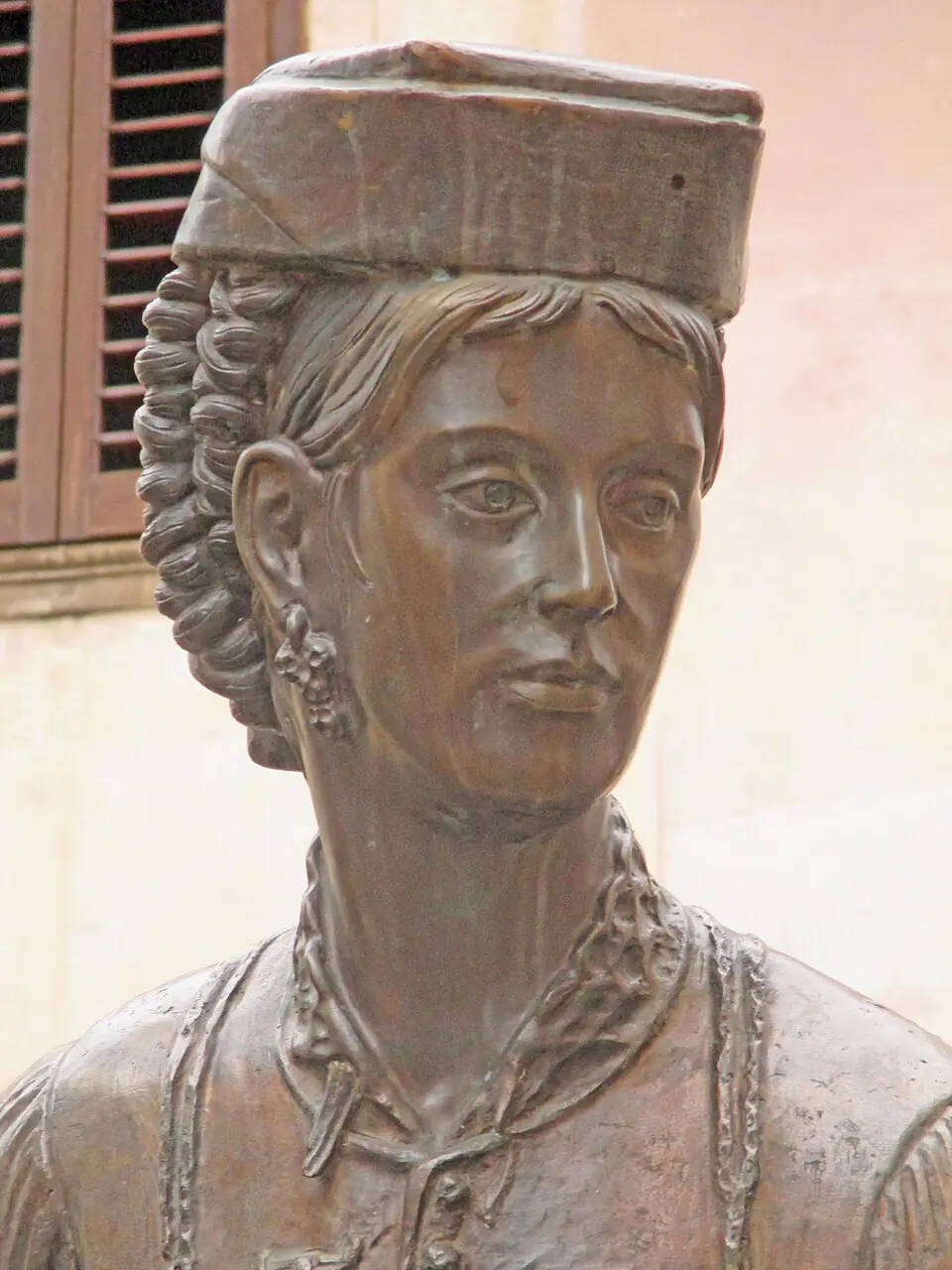
The base dress is dark. The sources speak of black or deep-blue skirts, with blouses with full sleeves and coloured little jackets closed by rows of silver buttons; another description recalls a black dress decorated with hand-made lace.
The costume changed shape over time, until it took on more sober forms and colours: that evolution stops in the early fifties of the twentieth century, and the form that remains is the one still used on important occasions.
The most recognisable feature is the headdress: flat, of dark fabric, it recalls a turban to many. In the village they call it cappellitto and it protects the head.
On the dark dress the details stand out: the hand-made lace, an often coloured apron and the silver buttons. They are what gives colour to a costume that is otherwise dark.
Where the costume comes from is not clear. Some local-history scholars attribute an oriental origin to it, and the turban-style headdress is one of the arguments in favour; others suggest a Lombard origin. The most widespread sources are guidebooks and popular writing, and the question remains open.
What the sources agree on is the role of the dress: it is a sign of identity for the village's women, who were responsible for managing the family's resources and representing its prestige, and it is described as a dress that gives the wearer a solemn bearing.
The costume is not a museum piece: it still appears on important occasions and at the village festivals, in parades and costumed re-enactments, with the presentosa on the chest.
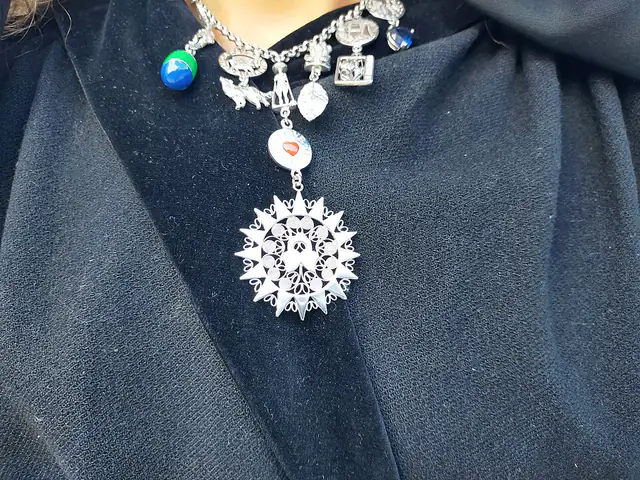
It is a gold, or silver, filigree pendant shaped like a star, with one or two hearts at the centre. It was given to the bride-to-be as a pledge of love: one source says it was the mother-in-law who gave it. Worn on the chest, over the costume, it said that the woman was promised.
On its origin the sources disagree: one places it in the eighteenth century, others say that the first presentose were made in other parts of Abruzzo and that the custom reached Scanno between the eighteenth and nineteenth centuries. D'Annunzio helped make it known outside the region, describing it at the end of the nineteenth century in “Il trionfo della morte”; according to one source it is he who gave it its name.
They are the traditional earrings: large, crescent- or boat-shaped, pierced, with small pendants inside. The oldest surviving examples date from the end of the eighteenth century; in the pierced designs grotesque faces, birds and floral motifs recur, which the sources read as symbols of abundance and prosperity.
The name changes from one source to another: one derives it from the verb “sciacquare” (to rinse), recalling the movement of water; others use different forms.
It is the wedding ring decorated with tiny grains of gold. There are few descriptions of it and the sources do not always agree on name and shape: it is a jewel less well known than the presentosa.
In Scanno goldsmithing is an ancient art, linked to the golden age of sheep farming, in the nineteenth century, when there were people in the village who could afford a jewel. The most cited techniques are filigree, made of very fine gold threads worked by hand, and microcasting with cuttlebone; some sources also stress the use of silver.
Many jewels are born from elements of the costume, such as buttons and buckles, and still today the goldsmith workshops in the centre remake the old models. A gold jewel takes many hours of work: it is a purchase to make without hurry.
The costume is seen above all at the village festivals, when women in costume take part in the parades: the re-enactment of a wedding from another age, in mid-August, is the occasion on which costume and presentosa parade together. The jewels, instead, you find in the goldsmith workshops of the old town, where old and new models are made and sold.
The festivals, month by month, and the rest of the village are on the page for Scanno.
It is a traditional Scanno jewel: a gold, or silver, filigree pendant shaped like a star, with one or two hearts at the centre.
Read more: The jewelsIt was a pledge of love: it was given to the bride-to-be and, worn on the chest, it said that the woman was promised.
Read more: The jewelsIt is a dark dress, with black or deep-blue skirts, blouses with full sleeves, a coloured apron, silver buttons, hand-made lace and a flat headdress recalling a turban.
Read more: The costumeThe base is dark, black or deep blue, brightened by the colours of the apron and the little jackets.
Read more: The costumeThe origin is uncertain: some local-history scholars consider it of oriental origin, others suggest a Lombard one.
Read more: The costumeThey are Scanno's traditional earrings, large, crescent- or boat-shaped, pierced and with small pendants inside.
Read more: The jewelsIt is a wedding ring decorated with tiny grains of gold, a jewel less well known than the presentosa.
Read more: The jewelsAt the village festivals and on important occasions, with costumed parades and re-enactments; in mid-August it parades in the re-enactment of a wedding from another age.
Read more: Where to see themYes: the goldsmith workshops in the old town work gold and remake old models, presentosa included.
Read more: Where to see themD'Annunzio, who describes it at the end of the nineteenth century in the novel “Il trionfo della morte” and, according to one source, gives it its name.
Read more: The jewels