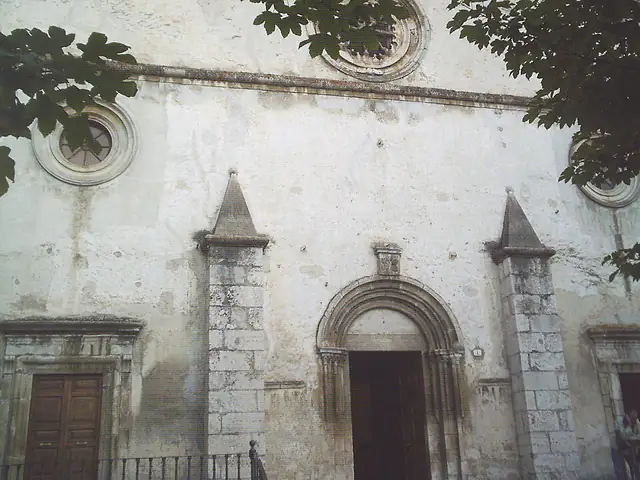
Church of Santa Maria della Valle
AbruzzoScanno's mother church is a church of local stone, with a bell tower thirty-five metres high, a portal with carved doors showing two skulls and, in…

Original name: Eremo di Sant’Egidio
A small country chapel on a hill at about a thousand metres, between the village and the lake, reached only on foot. From the hill you see Lake Scanno and Scanno together, and it is the halfway stop of the Sentiero del Cuore (Heart Trail).
Scanno's mother church is a church of local stone, with a bell tower thirty-five metres high, a portal with carved doors showing two skulls and, in…
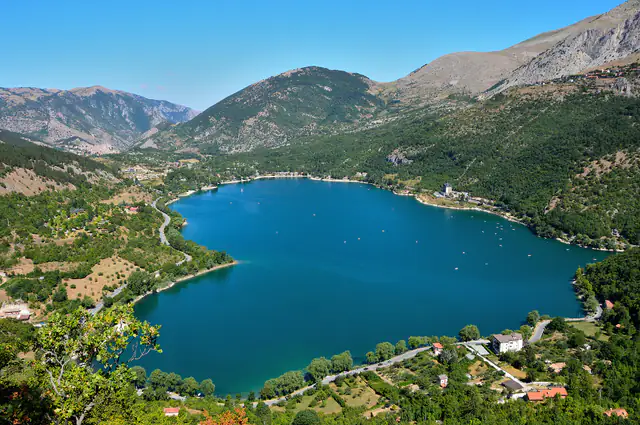
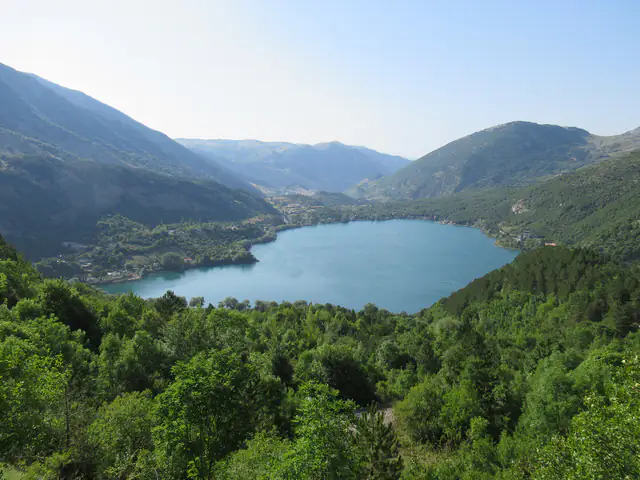
The largest natural lake in Abruzzo, at 922 metres in the Sagittario valley: from above it is shaped like a heart, close up it has colours that cha…
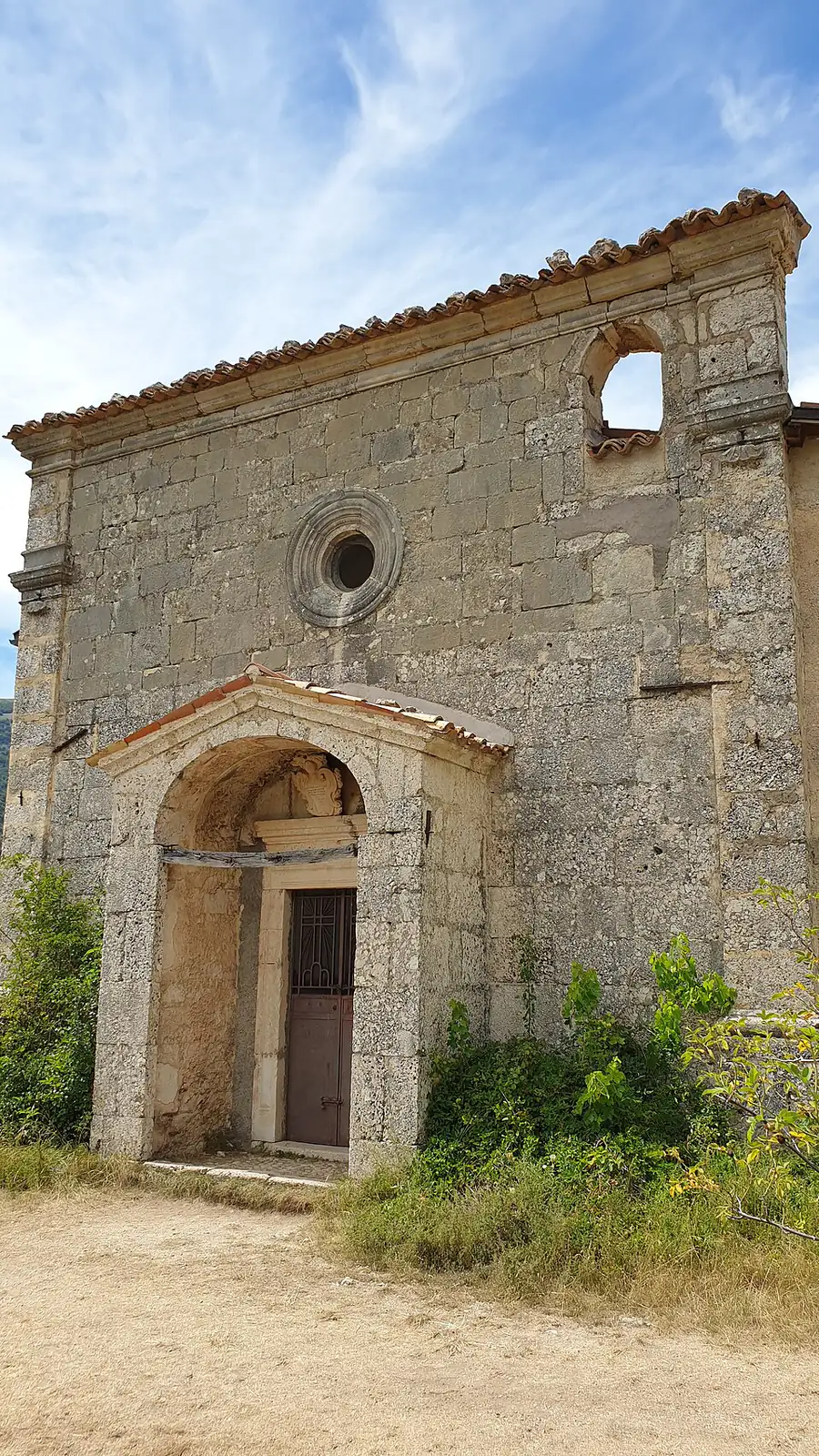
A small country church on the hill, with a fresco of the saint above the altar.
From the hermitage a last stretch leads to the viewpoint from which the lake reads as a heart.
The wood is green and fresh and there are few crowds: one of the loveliest months.
A small country chapel on a hill at about a thousand metres, between the village and the lake, reached only on foot. From the hill you see Lake Scanno and Scanno together, and it is the halfway stop of the Sentiero del Cuore (Heart Trail).
The Hermitage of Sant'Egidio (Eremo di Sant'Egidio) is small and simple, and lies along the route to the viewpoint over the heart-shaped lake. It has a story of its own, linked to an ancient saint and a plague, and a point of view worth the stop.
It stands on a hill above Scanno, at about 1,100 metres above sea level, between the village and the lake. No road reaches it: you go on foot, along the Sentiero del Cuore, from the lake or from the village. The path climbs through the wood and here the two starting points rejoin; from here a last stretch leads to the viewpoint.
The yellow route follows the roads and links Hermitage of Sant'Egidio to nearby places; the dotted line is the short connection from the road to the place.
Data: © OpenStreetMap contributors (ODbL) · Relief from AWS Terrain Tiles (SRTM, EU-DEM and other open sources).It is a small, simple country church, with a floor of plain bricks. Above the altar there is a fresco of the saint. The exact date of construction is not known: the sources indicate the seventeenth century as the period in which the chapel appears in documents and is dedicated to Sant'Egidio, and the eighteenth century as that of a restoration.
Tradition links the hermitage to the plague. It is told that Scanno was spared the contagion and that the chapel was dedicated to Sant'Egidio in thanks: an inscription on the church records the fact and places it in the seventeenth century.
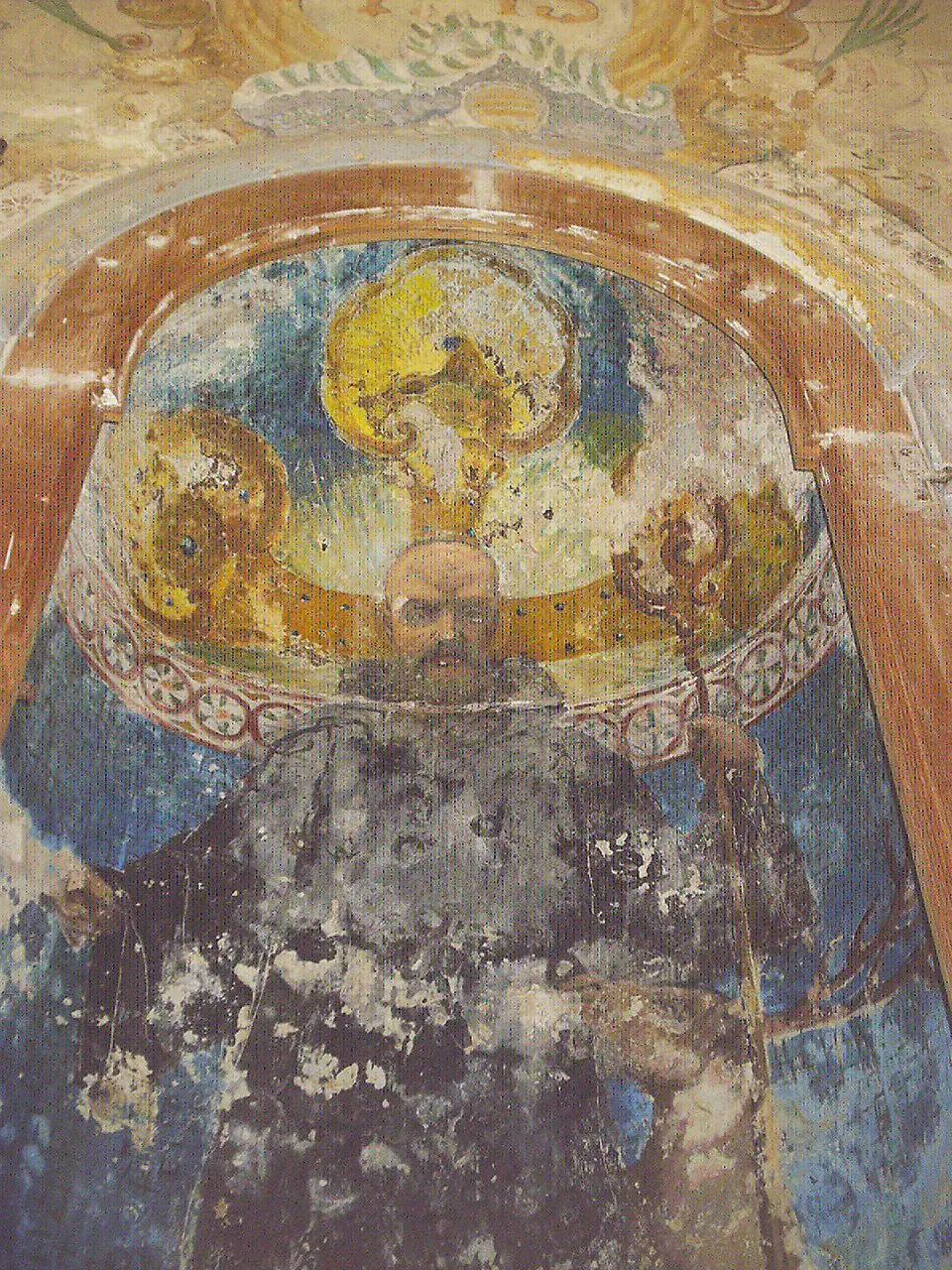
Sant'Egidio (Saint Giles), or Giles the abbot, is an ancient saint surrounded by legend. According to the story he lived as a hermit in a wood near Arles, in Provence, where he founded a monastery, later called Saint-Gilles. His symbol is a hind: the legend says it nourished him every day, and that a king, hunting, shot an arrow at the animal and wounded the saint instead. After that episode the king funded the monastery. Historians, however, consider the news about his life uncertain.
The saint is celebrated at the beginning of September. The sources attribute different patronages to him: of the sick, the poor, people with disabilities and, for one source, also of weavers, a link that in Scanno, a village of shepherds and wool, is no surprise.
The hill is also a viewpoint: from here you see the lake and the village of Scanno. The heart of the lake, however, cannot yet be read from here: to see it whole you have to do the last stretch to the viewpoint, which lies beyond the chapel.
From the village you climb from via della Pineta and guidebooks speak of half an hour or a little more; from the lake, starting from the road running along it, about an hour. The path is easy, suitable also for children from about seven years old; you need closed shoes with a good sole. Starting points, stops, times and a map of the route are in the guide to the Sentiero del Cuore.
From the hermitage the last stretch leads to the viewpoint over the lake. Then you go down to Lake Scanno or to Scanno, for a stop in the village; by car, further downstream, are the Sagittario Gorges and Lake San Domenico.
The path can be done in several seasons: in spring and summer the wood is green and gives shade; in autumn, above all in October, the woods above the lake blaze; in winter you can climb with suitable shoes and equipment. Month by month, below you will find what to expect.
Few elements, but all to be looked at slowly.
Above the altar there is a fresco of Sant'Egidio, the saint of the hermit and the hind.
From the hill you see the lake and the village of Scanno.
From the hermitage a last stretch leads to the viewpoint from which the lake reads as a heart.
The stories and symbols linked to the saint and his chapel.
Sant'Egidio's symbol is a hind: the legend says it nourished him every day in the wood and that a king, hunting it, wounded the saint with an arrow.
According to tradition Scanno was spared the contagion, and the chapel was dedicated to the saint in thanks: an inscription records it.
Best time: from May to June and from September to October. The bars show how well suited the month is: the taller, the better.
The path can also be done in winter, with suitable shoes and equipment.
Still winter: short days and few people, suited to those with snow equipment.
The thaw melts the snow: the path can still be damp.
Tender green and soft light: a good time to climb to the hill.
The wood is green and fresh and there are few crowds: one of the loveliest months.
Long days and a wood that gives shade: the climb is pleasant.
The heat pushes you to look for the cool hours; the wood gives shade.
A month of heavy traffic to Scanno: it is best to climb early in the morning.
Fewer people and colours beginning to change: excellent for photography.
The woods light up in yellow and orange and the lake is seen from above among the colours.
Fallen leaves and short days: the wood is quiet and the light is low.
Cold and short days: it is best to choose something else.
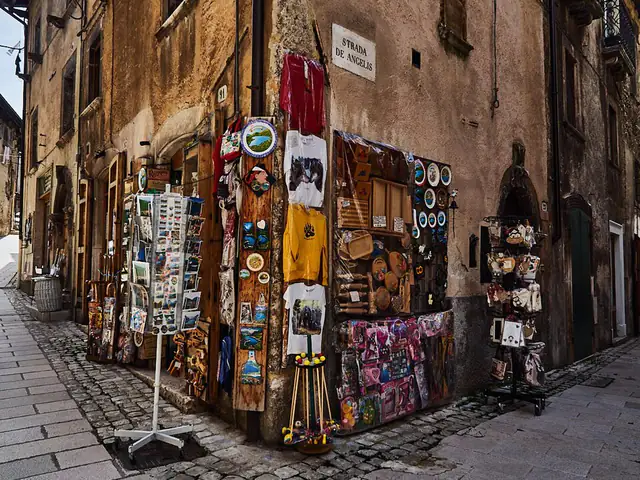
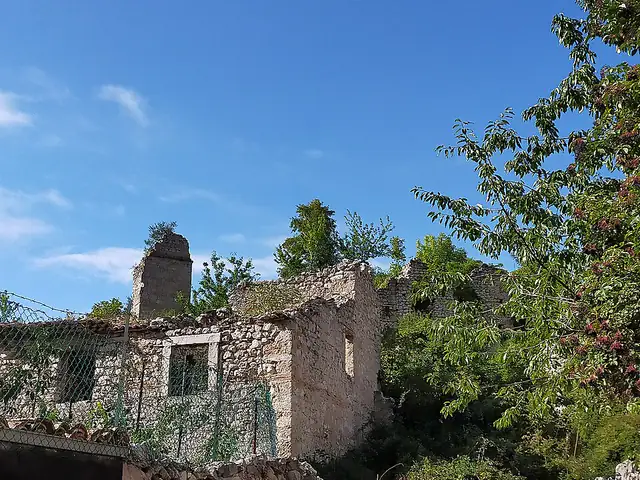
Postcards from the area, with the straight-line distance.
Tender green and soft light: the climb through the wood is pleasant.
The woods above the lake light up: the most photographed moment of the path.
You can climb with suitable shoes and equipment.
On a hill above Scanno, at about 1,100 metres above sea level, between the village and Lake Scanno: it can only be reached on foot, along the Sentiero del Cuore.
Read more: Where the Hermitage of Sant'Egidio isOn foot, along the Sentiero del Cuore: from the lake, from the road running along it, or from Scanno, from via della Pineta. The two paths rejoin at the hermitage.
Read more: How to walk thereFrom the village guidebooks speak of half an hour or a little more, from the lake about an hour.
Read more: How to walk thereAn ancient hermit who, according to the story, lived in a wood near Arles, in Provence, where he founded a monastery; his symbol is a hind. Historians consider the news about his life uncertain.
Read more: Who Sant'Egidio wasTradition says Scanno was spared the contagion and that the chapel was dedicated to the saint in thanks; an inscription on the church records it, in the seventeenth century.
Read more: The plague and the thanksgivingA simple little church, with a brick floor and a fresco of the saint above the altar.
Read more: A country chapelFrom the hill you see the lake and Scanno; to see the whole heart-shaped lake you need the last stretch to the viewpoint, beyond the chapel.
Read more: The view from the hillIn spring, summer and autumn; October for the colours of the woods. In winter only with suitable shoes and equipment.
Read more: When to go, month by month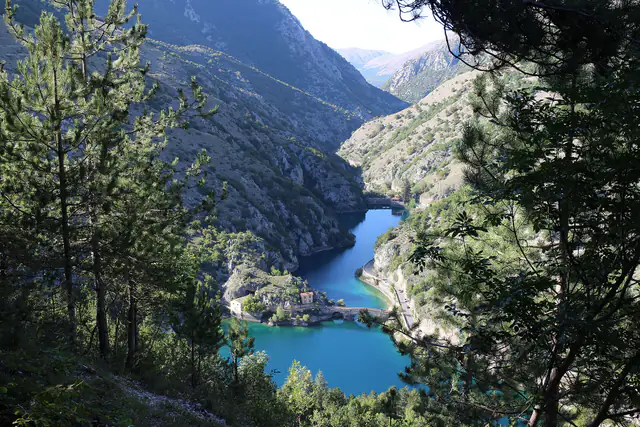
 1 km
 3 km
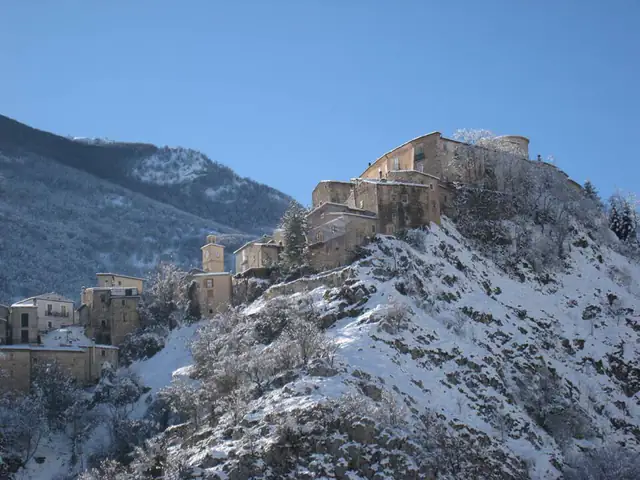 4 km
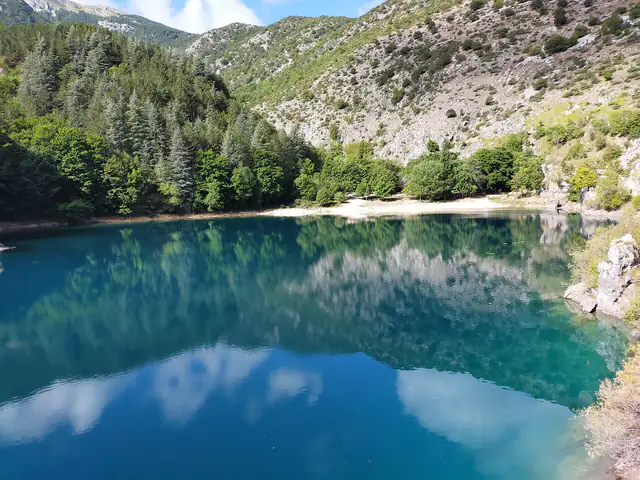 5 km
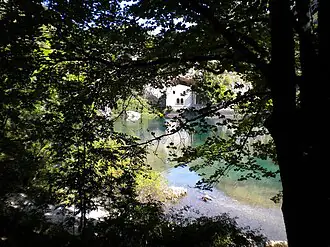 5 km
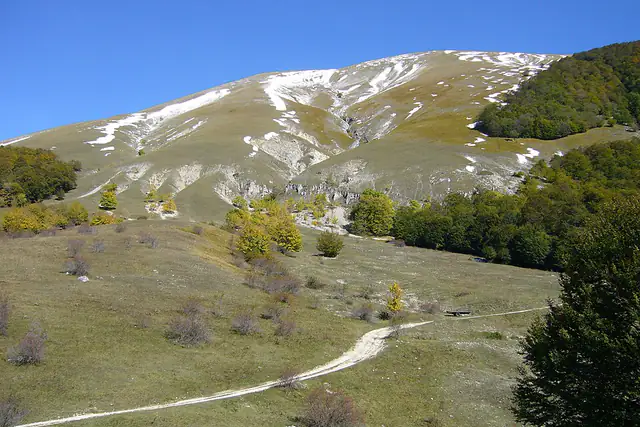 10 km