Church of Santa Maria della Valle
AbruzzoScanno's mother church is a church of local stone, with a bell tower thirty-five metres high, a portal with carved doors showing two skulls and, in…

A stone village in the Sagittario valley, minutes from the lake that looks like a heart from above: shepherds, goldsmiths and alleys that turn into staircases.
Scanno's mother church is a church of local stone, with a bell tower thirty-five metres high, a portal with carved doors showing two skulls and, in…
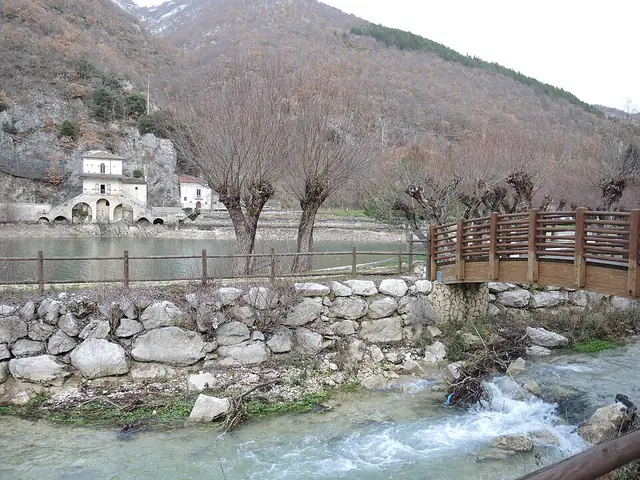
A small country chapel on a hill at about a thousand metres, between the village and the lake, reached only on foot. From the hill you see Lake Sca…
The patron saint's church, in the old village, rebuilt in the eighteenth century.
Chocolate and almond biscuits, covered with a glaze of sugar and dark chocolate.
In the alleys of the centre there is no shortage of little shops with postcards, T-shirts and small objects: the simplest memento of a day in Scanno.
The feast of Sant'Antonio, with mules, beams and bread.
A stone village in the Sagittario valley, minutes from the lake that looks like a heart from above: shepherds, goldsmiths and alleys that turn into staircases.
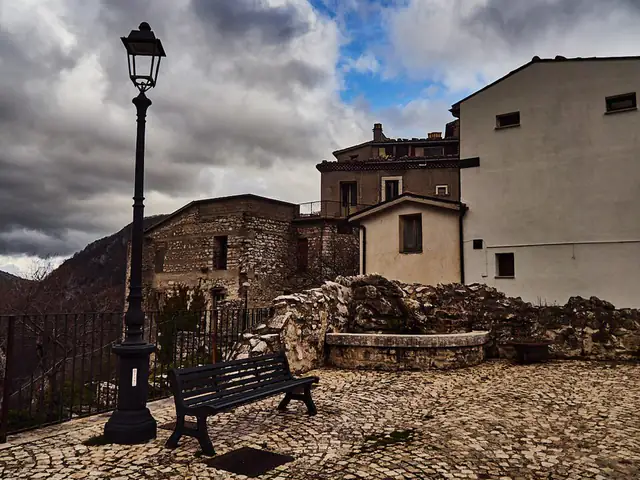
Scanno sits high up, at about a thousand metres, and anyone who arrives tends to stay longer than planned. Stone houses climb the slope, arches open onto tiny courtyards, staircases cut through the village in every direction. It is one of the most photographed villages in Abruzzo, yet it remains a real place, with a mountain history behind it and Lake Scanno (Lago di Scanno) a short walk away.
The loveliest way to arrive is to climb the valley through the Sagittario Gorges (Gole del Sagittario), where the road runs between rock walls tens of metres high; the reserve is managed by the WWF. Then the valley opens up and the water appears: Lake Scanno, at 922 metres above sea level, is the largest natural lake in Abruzzo. It was created by a landslide that in prehistoric times blocked the course of the river Tasso and, seen from above, it draws an almost symmetrical heart, with a small notch at the top.
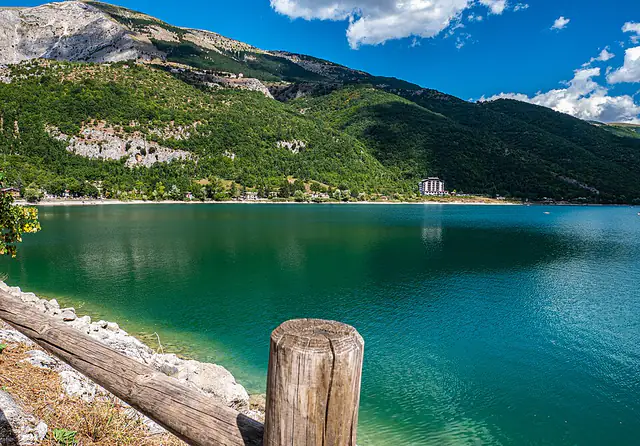
The yellow route follows the roads and links Scanno to nearby places; the dotted line is the short connection from the road to the place.
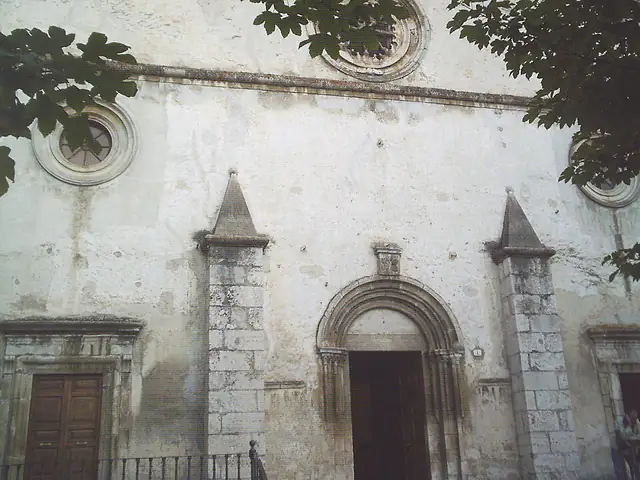
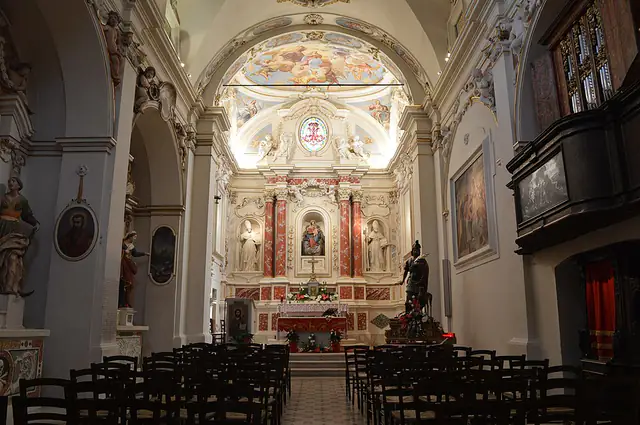
Data: © OpenStreetMap contributors (ODbL) · Relief from AWS Terrain Tiles (SRTM, EU-DEM and other open sources).Like almost every Italian village, Scanno has far more churches than such a small place would need, and it is worth stepping inside a few. The main one is Santa Maria della Valle: the oldest records go back to the sixteenth century, when it became a parish church and received Renaissance frescoes, while the Burgundian-style portal is dated between the twelfth and thirteenth centuries. Inside you will find a baptistery and the statue of the patron saint.
Sant'Eustachio (Saint Eustace) is the patron saint's church, in the old village, in the form rebuilt in the eighteenth century. The Madonna del Lago has a dramatic position, perched above the water near the beach area. There are also the churches of Sant'Antonio Abate, San Giovanni Battista, the Madonna di Costantinopoli and the Madonna delle Grazie, San Lorenzo and San Michele Arcangelo.
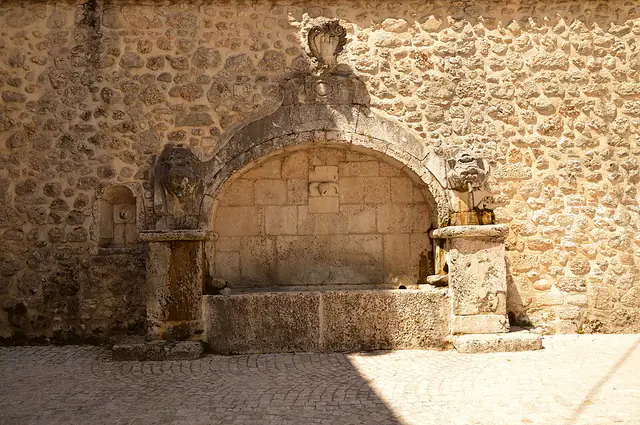
Scanno's finest monuments are found by walking. The Fontana del Sarracco is the best known: a double stone arch with carved masks from which the water flows; according to one guide, each spout had a mask representing a social class, and each class drank from its own. The sources disagree on the date: some say sixteenth century, others recall that in the Middle Ages it was a drinking trough outside the settlement. Smaller, the Fontana del Pisciarello stands just inside the walls, near Porta Sant'Antonio, with an arch and two masks pouring water from two spouts.
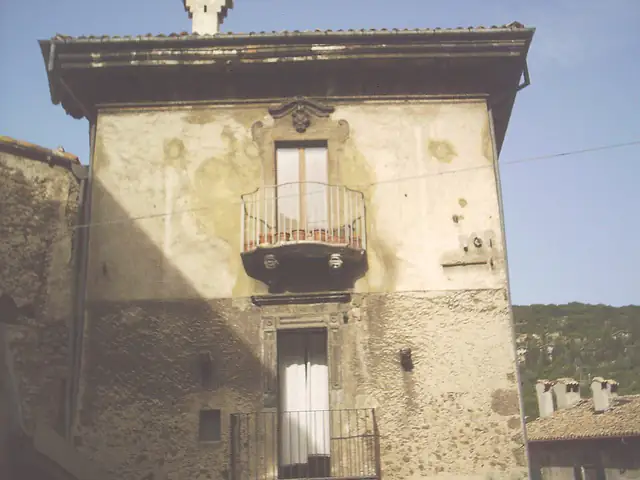
Among the palaces, the most elegant is Palazzo Mosca, in piazza San Rocco, with a baroque portal and a cornice decorated with putti. It is not the only one: in the centre you can also pick out the Tanturri, Serafini Ciancarelli, Di Rienzo and Nardillo palaces, the last with another baroque portal. Those who want to go further can look for the Museo della Lana (Wool Museum), dedicated to the craft that made the village rich.
Scanno long remained on the margins of the great events of history, and that has preserved its character: life revolved around sheep farming and transhumance, and the village developed customs all its own. You can see it in the women's costume, with a skirt and bodice of dark fabric adorned with embroidery and an almost oriental taste, which still appears on important occasions.
The village's other signature is gold worked in filigree. The presentosa is a pierced star with one or two hearts at the centre, once given to the bride-to-be as a pledge of love; the cicerchiata is a wedding ring decorated with tiny grains of gold; the sciaquajje are boat-shaped, pierced earrings. The goldsmith workshops keep remaking old models, and in Scanno it is easy to stop in front of a shop window. The story of the dress and the jewellery, with their origins and details, is told in the guide to the costume and the presentosa.
It is no accident that Scanno is such a portrayed place. In the fifties photographers such as Henri Cartier-Bresson and Mario Giacomelli passed through: Giacomelli's 1957 shot, known as “Scanno Boy”, is held at MoMA in New York. The credit goes to the raking light on the alleys, the women in black on the doorsteps and the stone that changes colour with the hours.
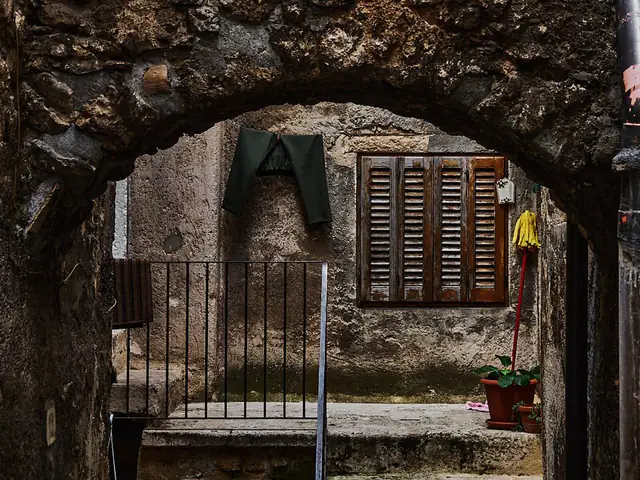
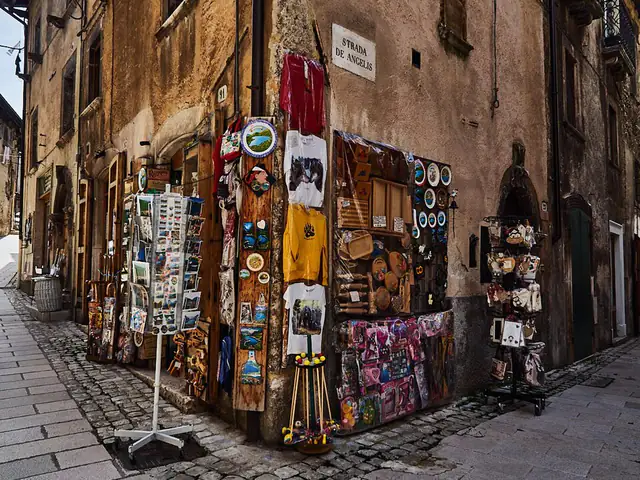
The old town is visited on foot and without a timetable: alleys, arches, staircases, a fountain with carved masks, the Casa Mosca bearing the date 1564. The viewpoints over the village and the valley are many and almost always a few steps away. Those who want to see Scanno from above can follow the path that leaves the village and reaches the Belvedere del Cuore (Heart Viewpoint), from which the lake shows its shape.
Around the lake you can walk, birdwatch, paddle a canoe or a pedalo. A little further down, Villalago looks over the smaller, more secluded Lago di San Domenico (Lake San Domenico), and nearby stands the Hermitage of San Domenico (Eremo di San Domenico). Beyond the peaks begins the Abruzzo, Lazio and Molise National Park, with Pescasseroli as its main gateway; on the opposite side of the valley lies Anversa degli Abruzzi, while to the east, on the plateau, Pescocostanzo offers another stone village.
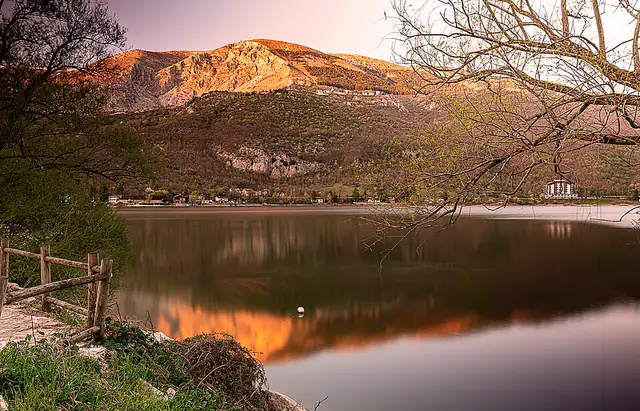
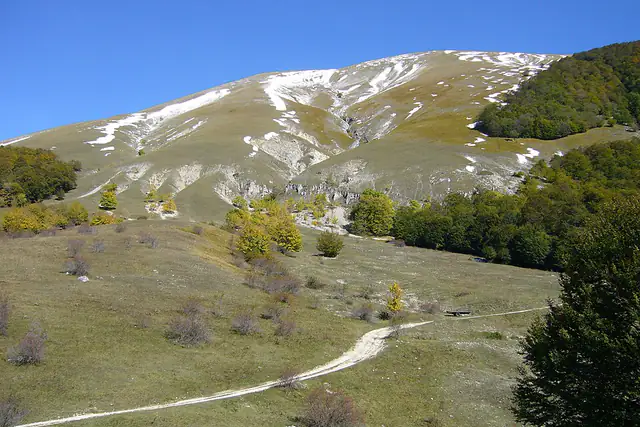
Scanno has no nightlife, and it is worth knowing before you climb up: the evening is made of walks through the alleys, long dinners of mountain dishes and, at certain times of the year, festivals with centuries of history. To avoid finding the village asleep, just choose the right moment. Below you will find what happens month by month and season by season; the exact programme changes from year to year, and the municipality's website is the place to check it.
Scanno's liveliest evenings are those of its festivals: ancient rites, costumed parades, great bonfires and tastings. Below you will find the most important ones in the order of the year. The programme changes, but these occasions return every year in the same period.
Ancient songs at the start of the month, and in mid-January the feast of Sant'Antonio Abate.
Two ancient processions, among the village's religious traditions.
The feast of Sant'Antonio, with mules, beams and bread.
The procession of a wedding from another age, in costume.
Sant'Eustachio, the village's patron saint, around the church dedicated to him.
Three great bonfires on the hills, at sunset: the most spectacular festival.
The tasting festival, with the cellars open.
Crafts and typical products in the centre.
Scanno changes its face with the seasons, and each has its own audience. Autumn is the most sought-after moment: the beech woods blaze between October and the first half of November, and in November, for the Glorie di San Martino (Glories of Saint Martin), great stacks of wood are lit at dusk on the heights around the village. In winter the snow arrives, with ski runs, cross-country tracks, snowshoeing and even ice skating. In summer the lake is the centre of everything; in spring the greenery and the blossoms invite you to trek. Month by month, below you will find what to expect.
Scanno's cooking is a mountain cooking: hand-made pasta, legumes, mutton and lamb, sheep's-milk cheeses, almond and chocolate sweets. The dish that tells its story best is cazzillitti (or chezzellitti: the name changes from mouth to mouth), fresh pasta boiled in the water in which the fuoje, mountain herbs, are cooked, and then sautéed with garlic, chilli and pecorino.
Next come sagne with beans, chickpeas or ricotta, arrosticini, lamb grilled or oven-roasted with potatoes and pecora al cotturo, stewed for a long time with herbs and wine. To finish, pan dell'orso and mostaccioli.
Scanno's signature dish: fresh pasta boiled in the cooking water of the fuoje, mountain herbs, then sautéed with garlic, chilli and a little tomato and finished with pecorino.
Strips of hand-made fresh pasta, dressed with beans or chickpeas, with ricotta or with meat sauce.
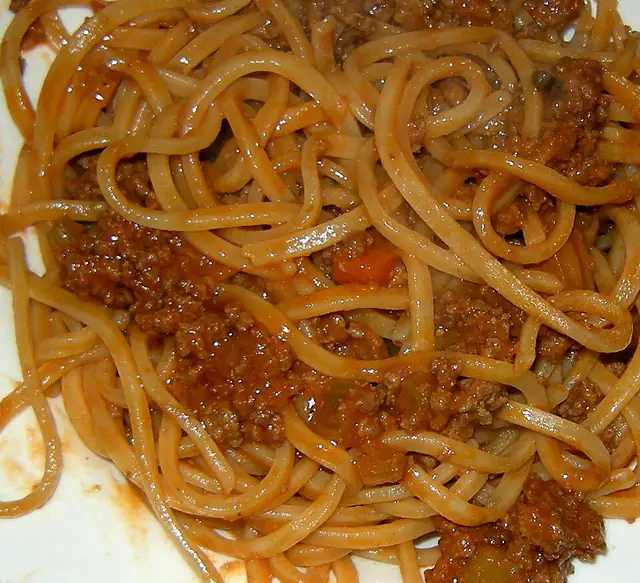
Egg pasta cut with a frame of taut wires, typical of all Abruzzo; in Scanno it is served with meat ragù.
Simple legume soups, among the traditional dishes.
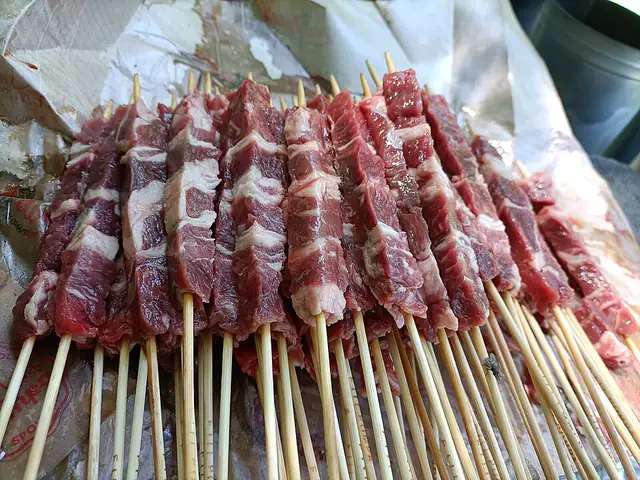
Skewers of mutton cooked over embers and seasoned only with salt and oil.
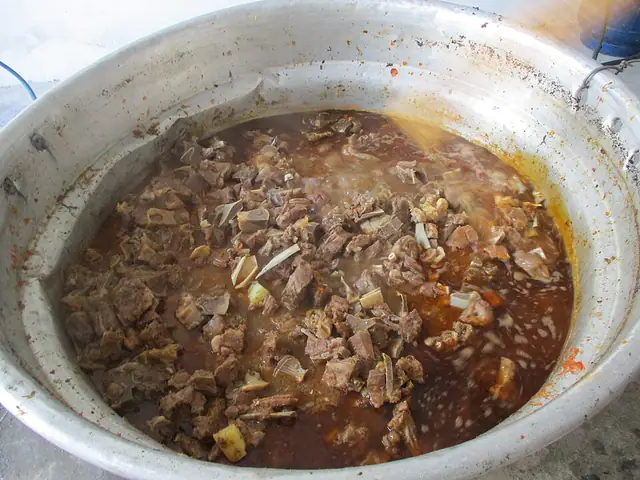
Mutton stewed for a long time with herbs and wine, a dish of mountain tradition.
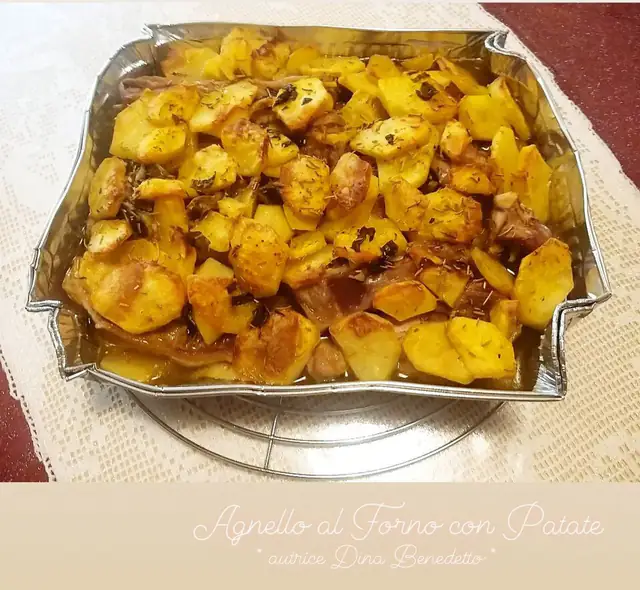
Lamb or mutton cooked over embers or in the oven with potatoes.
An offal speciality: a young lamb's entrails wrapped in the same animal's intestine.
Sausages, flattened salami, mountain ham, loin and the salamelle di tratturo.
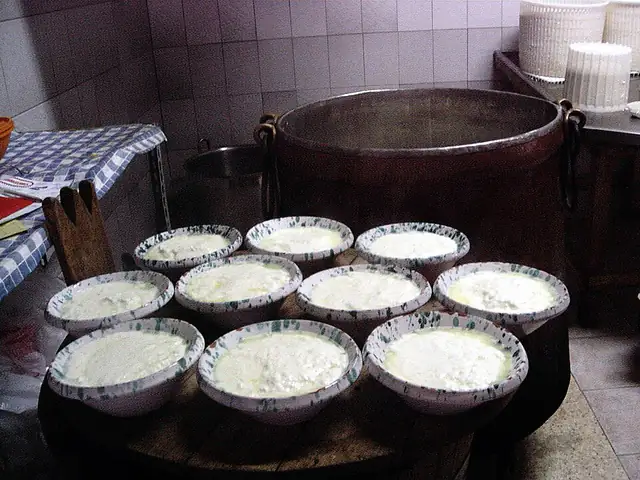
Almost all the milk is sheep's milk: caciotta kept in brine, cheeses from high-altitude flocks and ricotta.
Scanno's sweet: a small dome of pastry with almonds and honey, covered with a thin layer of dark chocolate; it recalls the loaves shepherds carried on the transhumance.
Chocolate and almond biscuits, covered with a glaze of sugar and dark chocolate.
Thin wafers baked between two iron plates, fragrant and crisp.
To go deeper, see our dedicated page “Typical products and dishes of Scanno: what to eat and what to buy”.
What you see, wear and tell in Scanno: the signs that make the village recognisable.
It is Scanno's emblem: the lake seen from above draws it, and you find it again at the centre of the presentosa, the village's love jewel.
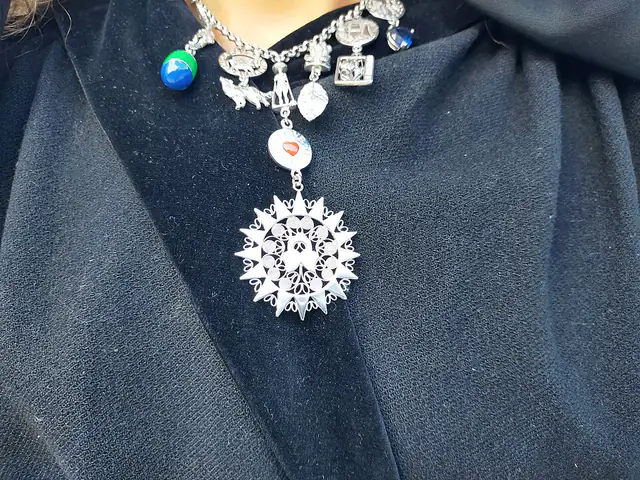
A gold filigree star with one or two hearts at the centre, given to the bride-to-be. Worn on the chest, it said that the woman was promised and awaiting her fiancé's return, away with the transhumance. The name is due, according to one source, to D'Annunzio, who mentions it in “Il trionfo della morte”.
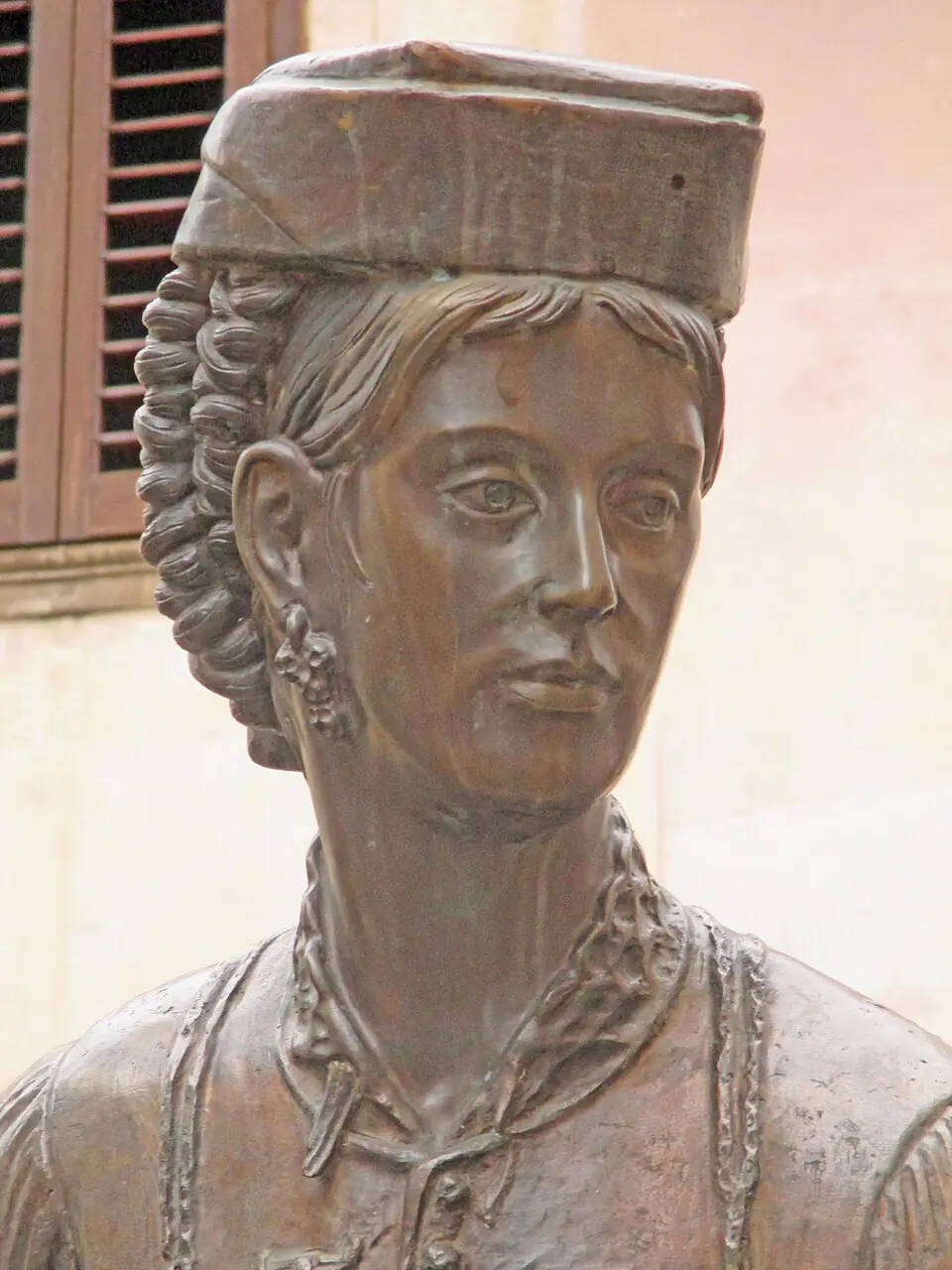
A ceremonial dress born between the seventeenth and eighteenth centuries, when wool made the village rich: a wide skirt, a bodice of dark cloth, tombolo lace and a turban-style headdress of dark fabric, with an oriental flavour. Some see Arab or Spanish influences in it.
We have not found an official emblem animal, but the sheep is behind almost everything: the wool that enriched the village, the cheeses, the arrosticini and even pan dell'orso, born from the shepherds' loaves on the transhumance. In the surroundings the deer also lives, in the wildlife oasis dedicated to it.
Scanno's patron saint is Sant'Eustachio, celebrated in September. His church, also dedicated to the Madonna di Loreto, stands at the highest point of the old village, where tradition says there was a Roman temple dedicated to the god Pan: Christian and pagan in the same place. It was rebuilt at the start of the eighteenth century, after earthquake damage.
Two ancient processional rites, including the procession of the Incappucciati, which are part of the village's religious traditions.
What to take home, besides what you eat.
The souvenir par excellence: the goldsmith workshops in the old town work gold in filigree and remake the old models. Besides the presentosa, there is the cicerchiata (a wedding ring decorated with tiny grains of gold) and the boat-shaped pierced earrings, whose name changes from source to source: sciaquajje, circeglie. A gold jewel takes many hours of work: it is a purchase to make without hurry.
Tombolo is a bobbin lace worked on a padded cylindrical cushion, where the lacemakers move dozens of threads. In Scanno the goldsmiths have turned their floral designs into jewellery: pendants and filigree frames with tombolo inserts. You can also find hand-made embroidery and lace.
In the alleys of the centre there is no shortage of little shops with postcards, T-shirts and small objects: the simplest memento of a day in Scanno.
Best time: from January to February and from July to October. The bars show how well suited the month is: the taller, the better.
Snow and a still atmosphere: snowshoes, ski runs, cross-country tracks, and even ice skating.
Festivals and traditions Serenata delle Calzette and Chezette (start of the month); Sant'Antonio Abate bonfire (mid-month)
The heart of winter: the same activities as January, with snow that usually lasts longer at altitude.
Snow still on the high ground and the first milder days: more for strolling in the village than for skiing.
A transitional season: the low trails clear of snow, the high ones not yet.
Festivals and traditions Good Friday rites, between March and April
Bright green, blossoms and mild temperatures: the period guidebooks indicate as ideal for trekking.
Full woods and long days: walks around the lake and trails in the early hours of the day.
Festivals and traditions Procession of the beams
The lake is the centre of everything: walks in the shade, canoeing, pedalos and birdwatching.
Like July, but with more people at the lake: it is best photographed at dawn, and walking is best in the cool hours.
Festivals and traditions Ju Catenacce and Ferragosto fireworks (mid-month)
Fewer crowds and softer light; in the Park, between September and October, the deer rutting season begins.
Festivals and traditions Patron saint's festival of Sant'Eustachio
The foliage month: the high beech woods (above 1,400 m) change colour in the first half, the lower ones afterwards.
Foliage in the lower woods until mid-month; the Glorie di San Martino, with the great stacks of wood lit.
Festivals and traditions Deguscanno and Glorie di San Martino
The village prepares for winter: with the first snows the snowshoes return.
Festivals and traditions Christmas markets
Postcards from the area, with the straight-line distance.
The lake is the destination, the village the afterwards: early morning for the water and the trails, the afternoon for the alleys and the workshops.
A stroll through the old town and dinner with typical dishes; on the lakefront you can walk until sunset (the full circuit is about 5 km).
The season that brings the most people to Scanno: the woods change colour from top to bottom, and it is the moment to walk slowly.
A typical dinner and a stroll through the village streets, with November evenings enlivened by the festivals.
Snow, silence and short days: skiing, snowshoes or cross-country in the morning, and the village warm with cooking for the rest of the day.
Dinner in a venue in the village and, when there is snow, a walk through the alleys.
The old town on foot, with alleys, arches and staircases, the heart-shaped lake and the Sagittario Gorges you drive through on the way. In the village the church of Santa Maria della Valle, the Fontana del Sarracco, the Fontana del Pisciarello, Palazzo Mosca and the goldsmith workshops are worth a visit.
Read more: What to see in Scanno: the old townThe lake was born from a landslide that in prehistoric times blocked the course of the river Tasso: the water filled the basin and, seen from above, it has an almost symmetrical heart-shaped outline, with a small notch at the top. The Belvedere del Cuore, reached by a path leaving the village, shows it in its full shape.
Read more: A road that prepares you for the arrivalCazzillitti (or chezzellitti) with fuoje, sagne with beans, chickpeas or ricotta, spaghetti alla chitarra, arrosticini, pecora al cotturo and lamb grilled or oven-roasted. Among the sweets, pan dell'orso and mostaccioli.
Read more: What to eat in Scanno: typical dishesGold filigree jewellery, such as the presentosa, and tombolo jewellery and lace. In the centre there are also little souvenir shops with postcards and small objects.
Read more: What to buyIt is a filigree jewel shaped like a star with one or two hearts at the centre, given to the bride-to-be. Worn on the chest, it said that the woman was promised and awaiting her fiancé's return; it is part of Scanno's traditional costume.
Read more: Symbols and traditionsThe best months are January and February for the snow and July to October for the lake and the autumn colours: the beech woods change colour between October and mid-November. Spring is good for trekking.
Read more: When to go, month by monthScanno has no nightlife: in the evening you stroll through the alleys and have dinner with mountain dishes. The liveliest evenings are those of the festivals: Ju Catenacce in mid-August, the patron saint's festival in September, the Glorie di San Martino and Deguscanno in November.
Read more: Festivals, village fairs and tastingsIt is the re-enactment of a traditional Scanno wedding, in mid-August: the bride and groom lead a costumed procession through the alleys of the centre and, in the square, people dance the quadrille.
Read more: Festivals, village fairs and tastingsThey are three great bonfires lit in November, at sunset, on the hills around Scanno, around trunks up to twenty metres tall. People sing and dance around the fire, drink new wine and eat pizza coi quattrini.
Read more: Festivals, village fairs and tastingsAbout 1,050 metres, in the Sagittario valley, in the province of L'Aquila. Lake Scanno lies at 922 metres.
Read more: Scanno: the stone village by the heart-shaped lakeFor the heart-shaped lake, for gold filigree and the women's costume, and for the photographs that masters such as Henri Cartier-Bresson and Mario Giacomelli took here.
Read more: The village photographers loved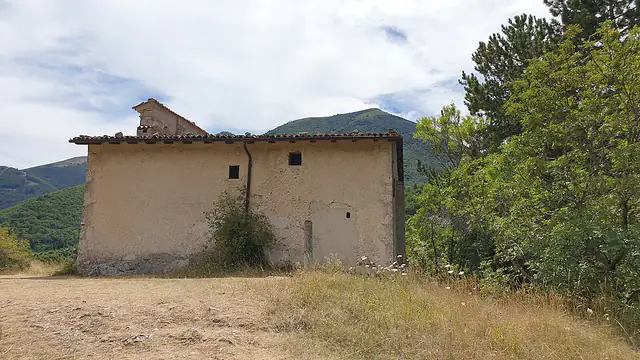
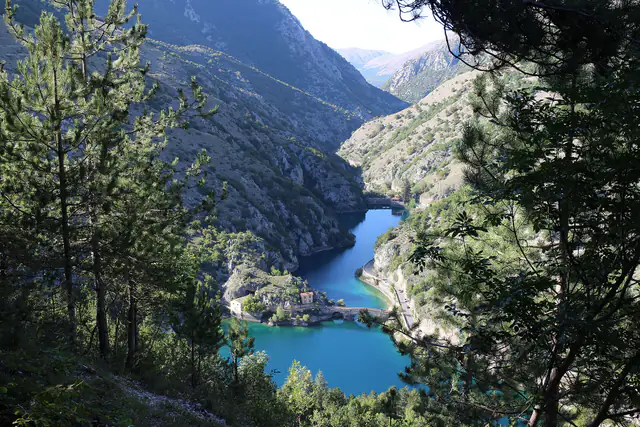 2 km
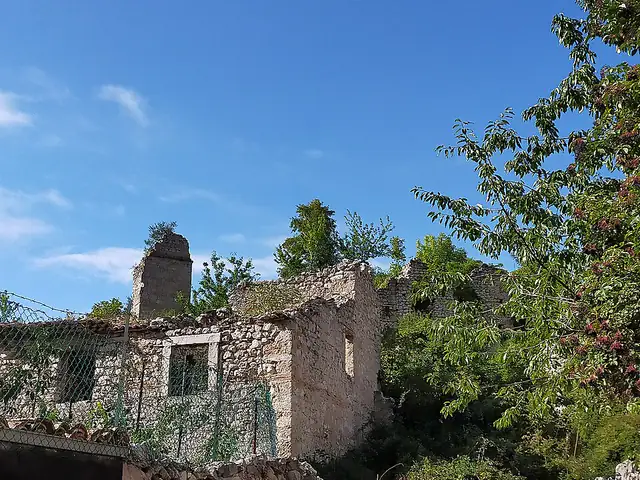 5 km
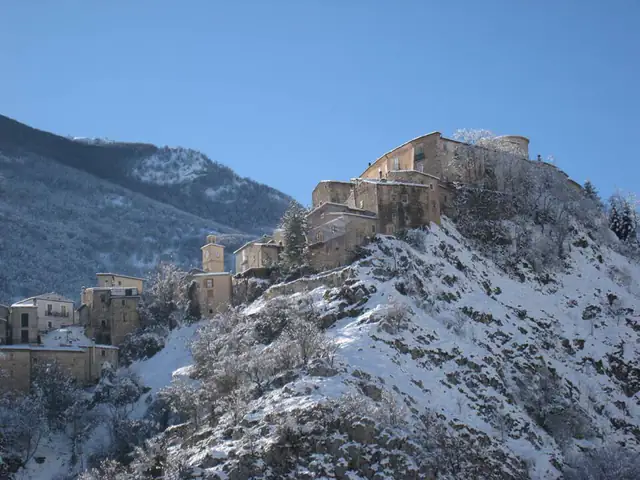 5 km
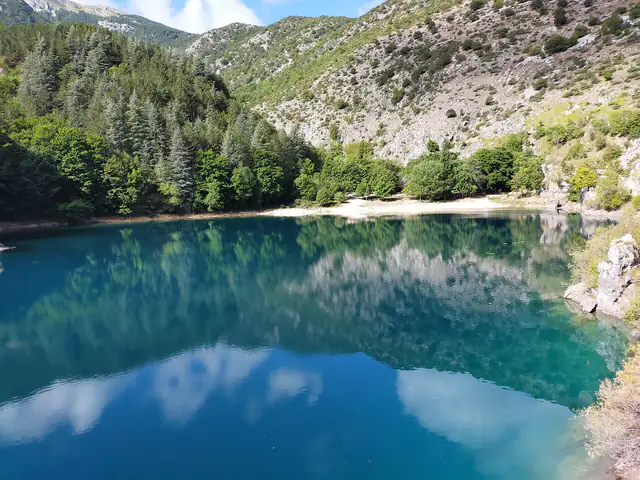 6 km
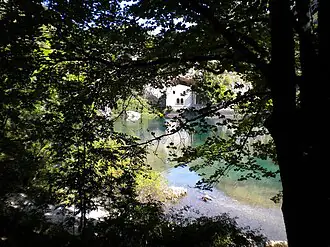 6 km
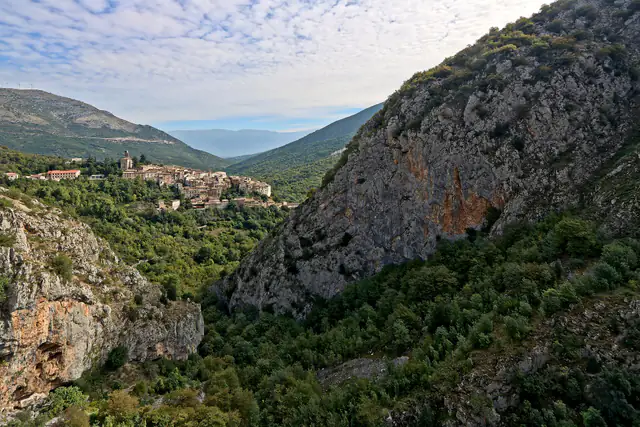 12 km
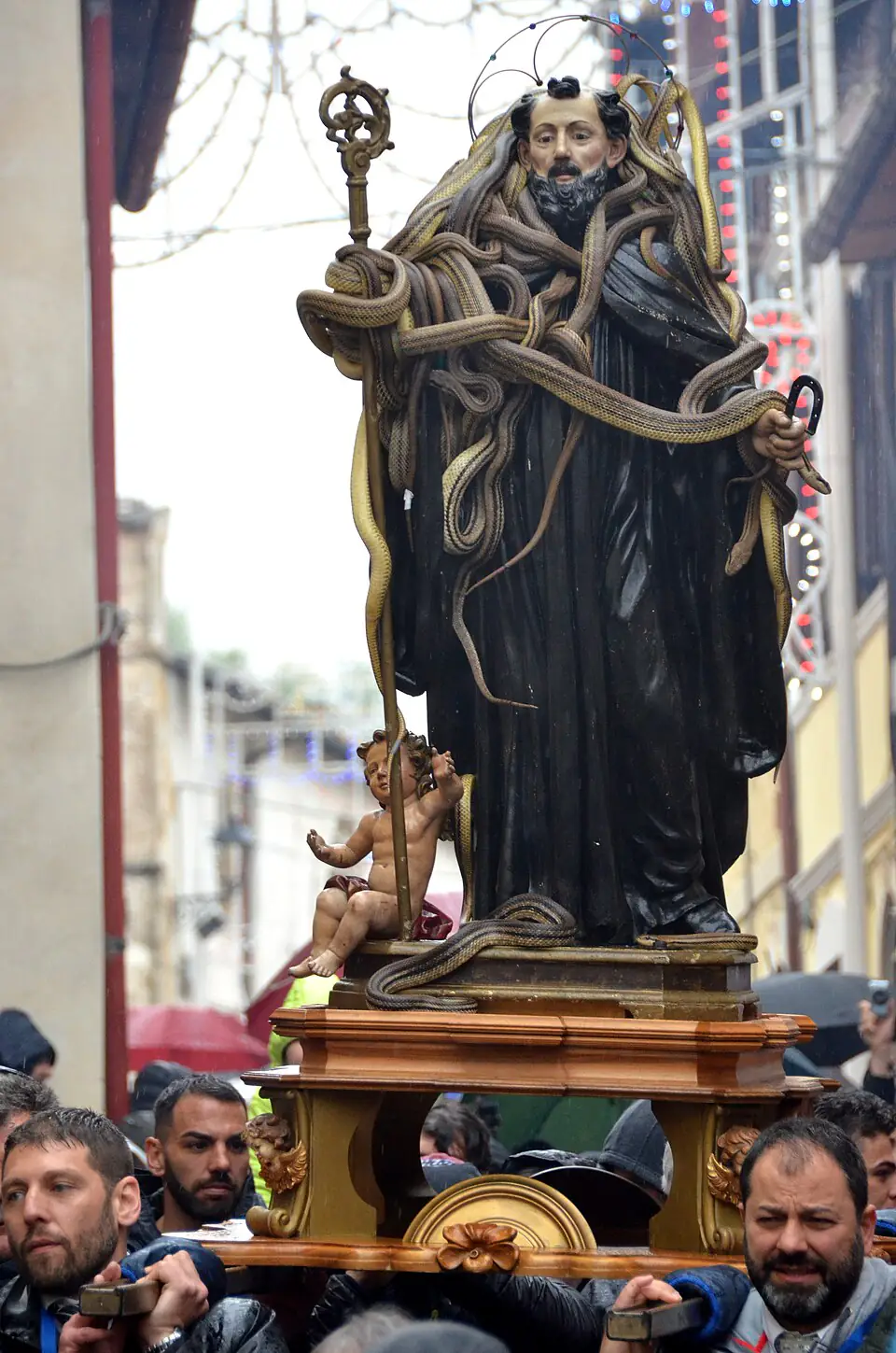 17 km