Typical products and dishes of Scanno: what to eat and what to buy

Hand-made pasta, mutton, mountain cheeses, almond sweets and gold jewellery: Scanno's table and workshops, item by item.

ItalyFlavours of Scanno
dishes and products
Tastes of Scanno1 / 2

Pecora al cotturo

Main course

Pecora al cotturo, also called pecora alla callara, is one of the most typical poor dishes of the Abruzzo mountains: mutton stewed for a long time with the herbs the shepherds had to hand, such as thyme, bay, rosemary and garlic. The name recalls the vessel, the cauldron (the callara, or cotturo), in which it cooks.

In Scanno you eat the way people lived in the mountains: with what the sheep gave, the flour and the high-altitude fields. It is not a cuisine of elaborate dishes but of simple gestures and a few good ingredients, and that is exactly why it has a character you recognise at the first taste.

This page is the guide to everything you can eat and take home: hand-made pasta, mutton and lamb, cheeses, almond sweets and the gold jewellery that made the village famous. For each item you will find how it is made, where it comes from and how it is told in the village. We leave out, on purpose, the places to eat, the opening hours and the prices: they change from one year to the next and a guide written to last cannot chase them.

To understand this table you have to start from the sheep. In the eighteenth and nineteenth centuries sheep farming was Scanno's most widespread activity and its first source of wealth: every autumn the flocks left the mountains to winter on the warm pastures of the Tavoliere delle Puglie, following the tratturi, the great grass roads of the transhumance, and in spring they came back. Wool made the money, milk and meat made the table, and traces of those journeys remain even in the sweets, as you will see.

Pasta and legumes: the mountain's first courses

Pasta is made by hand, with few ingredients, and dressed with whatever is at hand: legumes, wild greens, ricotta, a little meat.

First course

Cazzillitti (chezzellitti) with fuoje

Cazzillitti, or chezzellitti (the name changes from mouth to mouth), are the dish that says “Scanno” more than any other. It is a home-made pasta of very little: flour, boiling water and salt. The dough is worked by hand and the small pieces are shaped by dragging them with index, middle finger and thumb, leaving small grooves that then hold the sauce.

They cook quickly, in about six minutes, and go to the table with the fuoje, leafy greens: recipes speak of broccoli rabe or broccoli leaves and wild greens. They are sautéed in a pan with garlic, chilli and a little tomato, and finished with pecorino. There are different versions: with pork cracklings, or with beans and orapi, a variety of wild spinach.

Many link this pasta to Solina wheat, an old variety from the Gran Sasso area which, according to one source, is documented in notarial records from the sixteenth century. The exact origin of the dish, however, is uncertain and nobody can give a date for it.

First course

Sagne with beans, chickpeas or ricotta

Sagne are strips of fresh hand-made pasta of flour and water, rolled by hand and cut with a knife into short strips or diamonds. In Abruzzo each area chooses its own legume: chickpeas in L'Aquila, beans in Pescara, and in the upper Sangro, with beans and potatoes, the dish even has a name all its own, “abbòtta pezzènte”.

In Scanno sagne have a date: 17 January, the feast of Sant'Antonio Abate, when portions are handed out with ricotta. According to one tradition the custom goes back to the hospitaller clerics of Sant'Antonio Abate, who between the fourteenth and fifteenth centuries had a monastery in the village and offered the dish to the poor. On Fridays the ricotta, considered a rich food, was replaced by beans and olive oil. Today they are dressed with beans, a little lard and salted ricotta.

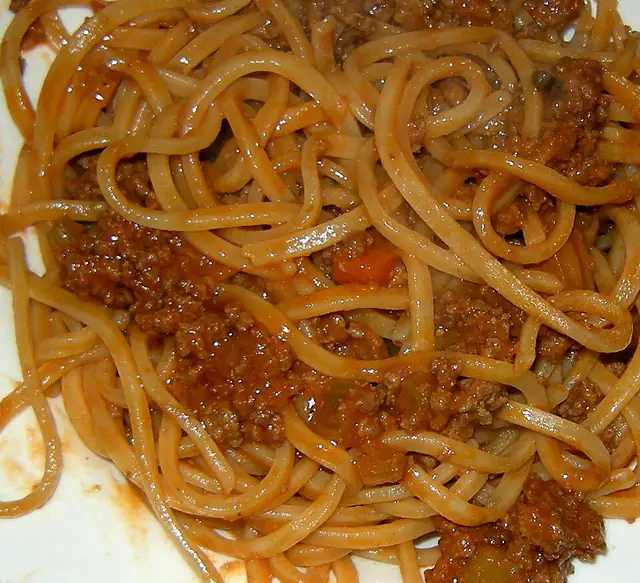
A plate of spaghetti alla chitarra with meat ragù
Spaghetti alla chitarra with ragù
First course

Spaghetti alla chitarra

Spaghetti alla chitarra are Abruzzo's pasta par excellence: egg pasta cut by pressing the sheet onto a wooden frame with taut steel wires, the “chitarra” (guitar), hence the name. The cut is square, with a good grip on the sauce.

In Scanno they are brought to the table with meat ragù. They are not a dish unique to the village: you find them throughout the region, and that is exactly why it is worth tasting them here, where hand-made pasta still has a place of honour.

First course

Legume soups

Legume soups are peasant and pastoral cooking in its simplest form: slowly cooked legumes, a drizzle of oil, a little pasta or bread. Beans and chickpeas are the same you find in the sagne: what changes is the way of preparing them, not the substance of a table made from what was grown and stored.

Mutton, lamb and embers

The meat is almost always mutton or lamb: the animal that made the village's history.

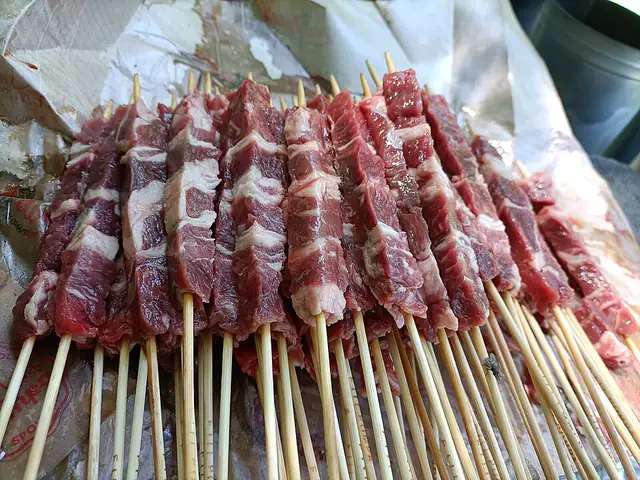
Arrosticini ready for the grill
Abruzzo arrosticini, ready for the grill
Main course

Arrosticini

Arrosticini are skewers of diced mutton (tradition calls for wether) threaded onto thin wooden sticks: they are cooked over embers, seasoned only with salt and oil. In the Abruzzo dialect they are also called rustelle or arrustelle.

They are cooked on a long, narrow brazier, the fornacella, and eaten with the hands, sliding the meat off the stick. They are the most emblematic dish of pastoral Abruzzo: in Scanno, where sheep were for centuries the village's wealth, they could not be missing.

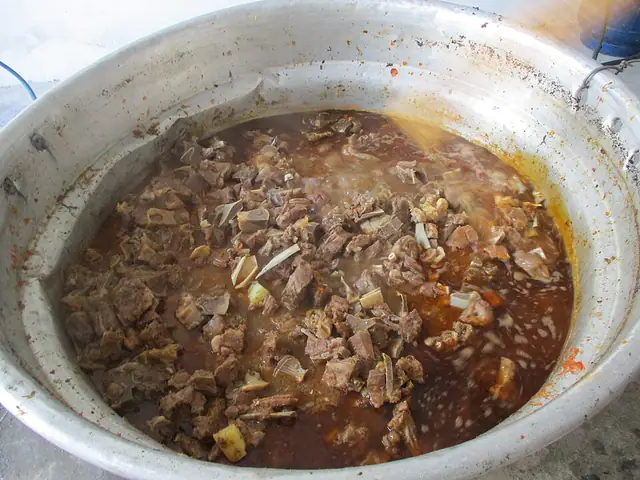
Pecora al cotturo being prepared in the cauldron
Pecora al cotturo being prepared, in the Marsica
Main course

Pecora al cotturo

Pecora al cotturo, also called pecora alla callara, is one of the most typical poor dishes of the Abruzzo mountains: mutton stewed for a long time with the herbs the shepherds had to hand, such as thyme, bay, rosemary and garlic. The name recalls the vessel, the cauldron (the callara, or cotturo), in which it cooks.

Cooking is slow, from four to six hours, and serves to make tender a meat that otherwise would not be. It is not a dish found only in Scanno, you find it throughout the Abruzzo mountains, but it tells the story of the shepherds and their flocks better than others.

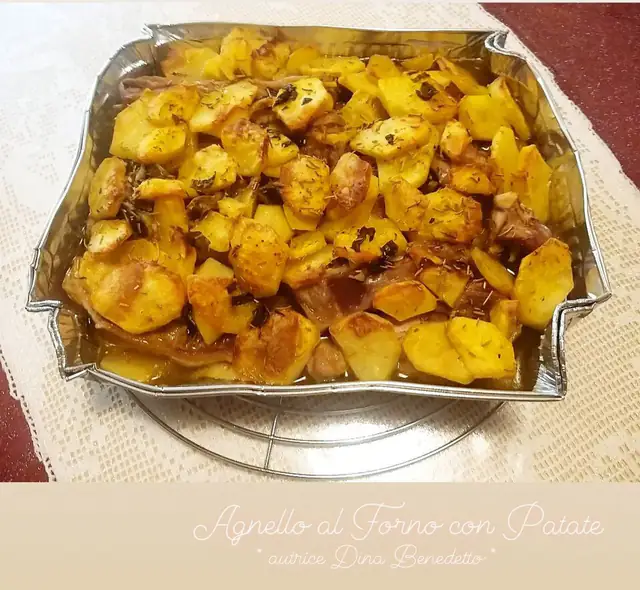
Oven-roasted lamb with potatoes
Main course

Grilled or oven-roasted lamb

Lamb, or wether, is cooked over embers or in the oven with potatoes: two simple ways that leave the meat its own flavour. In Scanno, where farming was for centuries the main resource, it comes from the same tradition that gave the cheeses and the wool.

Main course

Marro

Marro is a speciality for those who want to taste the tradition all the way: a young lamb's entrails wrapped in the same animal's intestine. A dish of poor cooking, in which every part of an animal was used.

It is not a dish for everyone: if you have never tasted it, ask how it is made before ordering.

Cheeses, ricotta and cured meats

Almost all the milk here is sheep's milk, and sheep's milk becomes pecorino, caciotta and ricotta: the thread that holds many dishes together.

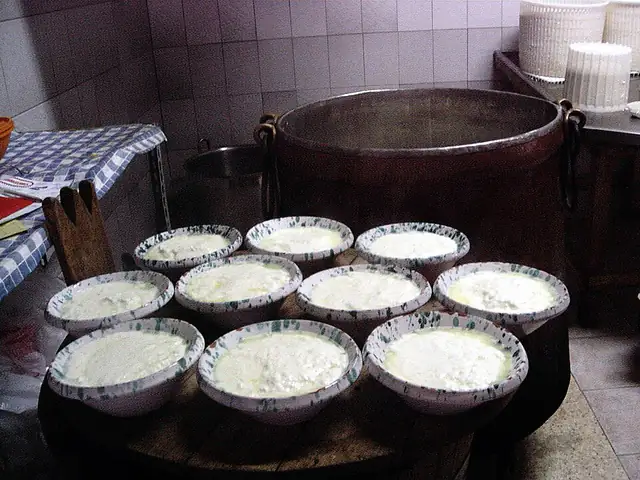
Fresh ricotta
Ricotta
Cured meats and cheeses

Pecorino, caciotta and sheep's ricotta

Scanno's most famous cheese is pecorino, made from sheep's milk and aged for months. Alongside are sheep caciotta, which is also kept in brine, and ricotta, including a version with a dark crust, known as “ricotta dalla crosta nera”.

Ricotta is used fresh, as on the sagne di Sant'Antonio, or salted and grated; pecorino finishes the cazzillitti. That is how cheeses and pasta hold together.

Cured meats and cheeses

Mountain cured meats

The cured meats are those of the mountains: sausages, flattened salami, mountain ham, loin and the salamelle di tratturo, whose name recalls the transhumance routes. Among the village's typical products wild boar sausage is also mentioned.

Sweets and almond biscuits

Scanno's sweets are made of almonds, honey, chocolate and few other ingredients.

Dessert

Pan dell'orso

Pan dell'orso is Scanno's emblematic sweet: a small dome of soft pastry with almonds, honey and butter, covered with a layer of dark chocolate. There is also a version with chocolate chips in the dough. It should not be confused with Pescara's parrozzo: it is a different sweet, softer because of the butter and honey.

Its roots are pastoral: it derives from the panelli, sweets of almonds and honey that shepherds took with them when leaving for the transhumance. A legend tells that a bear attacked a sheepfold and devoured only the panelli; it is a tale bordering on legend, with no historical evidence, but it explains the name.

The story of the modern sweet is less well known. It is attributed to a family of pastry makers in the village, who originally called it “Dolce Angela”, after their grandmother's name; the name “pan dell'orso” is said to have been suggested by the Scanno dialect poet Marco Notarmuzi. The sources do not agree on dates and authorship: take it as a story told in the village rather than as an established fact.

Dessert

Mostaccioli

Mostaccioli are the biscuits of the winter festivals: they are made with simple ingredients such as honey, walnuts and almonds, and are traditionally eaten at Christmas and New Year.

Recipes change from house to house and from source to source: some describe them as biscuits based on sponge cake and almonds, shaped like a flattened disc, some cover them with a glaze of sugar and dark chocolate, some make them with cooked must. There is no single version, and it is good to know that before looking for them.

Dessert

Amaretti

Amaretti are among the village's typical sweets, together with the mostaccioli and pan dell'orso: almond-based biscuits, as the name suggests.

Dessert

Ferratelle

Ferratelle are thin, crisp wafers, baked between two iron plates, hence the name. You find them throughout Abruzzo, and in Scanno they are part of the traditional sweets.

What to take home from Scanno

The best souvenirs are those that tell the story of the place: the village's gold, the lace, and something from the table.

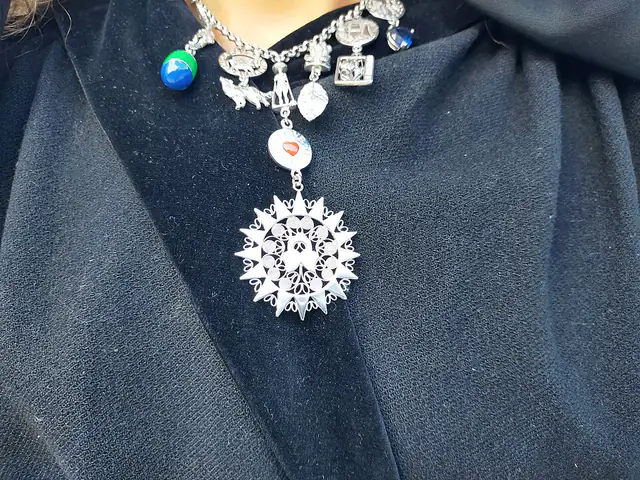
A filigree presentosa worn on the dark costume
The presentosa, worn on the costume
Goldsmithing

Presentosa and filigree jewellery

The souvenir par excellence is Scanno's gold. The presentosa is a gold filigree star with one or two hearts at the centre, given to the bride-to-be: worn on the chest, it said that the woman was promised and awaiting her fiancé's return, away with the transhumance. The name is due, according to one source, to D'Annunzio, who mentions it in “Il trionfo della morte”.

The goldsmith workshops in the old town work gold in filigree and remake the old models. Besides the presentosa there is the cicerchiata, a wedding ring decorated with tiny grains of gold, and the boat-shaped pierced earrings, which the sources call sciaquajje or circeglie. A gold jewel takes many hours of work: it is a purchase to make without hurry.

Lace

Tombolo lace and filigree jewellery

Tombolo is a bobbin lace worked on a padded cylindrical cushion, where the lacemakers move dozens of threads. In Scanno the goldsmiths have turned their floral designs into jewellery: pendants and filigree frames with tombolo inserts. You can also find hand-made embroidery and lace.

Souvenirs

From the table: pecorino, sweets and cured meats

If you want to take home a flavour, the products most often indicated as typical of the village are pecorino, pan dell'orso, mostaccioli and amaretti. Always ask how they should be stored and for how long.

When to taste what

Much of this cuisine can be found all year round: hand-made pasta, cheeses, cured meats, mutton and lamb. Some tastes, however, have a precise moment, on a fixed date: on 17 January, the feast of Sant'Antonio Abate, the sagne with ricotta; at Christmas and New Year the mostaccioli.

The village's festivals and tastings are the chance to try many things together: we tell about them, month by month, on the page for Scanno.

Frequently asked questions about Scanno

What are Scanno's typical dishes?

Cazzillitti (or chezzellitti) with fuoje, sagne with beans, chickpeas or ricotta, spaghetti alla chitarra, arrosticini, pecora al cotturo, lamb grilled or oven-roasted, sheep's cheeses and, for dessert, pan dell'orso and mostaccioli.

Read more: Pasta and legumes: the mountain's first courses

What are Scanno's cazzillitti?

They are a home-made pasta of flour, boiling water and salt, shaped by dragging small pieces with the fingers. They are served with fuoje, mountain leafy greens, sautéed with garlic, chilli and pecorino.

Read more: Pasta and legumes: the mountain's first courses

What are the sagne di Sant'Antonio?

They are sagne with ricotta (or with beans) handed out in Scanno on 17 January, the feast day of Sant'Antonio Abate. The custom is traced back to the hospitaller clerics who had a monastery in the village and offered the dish to the poor.

Read more: Pasta and legumes: the mountain's first courses

What is pan dell'orso?

It is Scanno's emblematic sweet: a small dome of soft pastry with almonds, honey and butter, covered in dark chocolate. It derives from the almond-and-honey panelli that shepherds carried on the transhumance.

Read more: Sweets and almond biscuits

Who invented pan dell'orso?

The sources disagree. It is attributed to a family of Scanno pastry makers, who originally called it “Dolce Angela”; the current name is said to have been suggested by the dialect poet Marco Notarmuzi.

Read more: Sweets and almond biscuits

What are arrosticini?

They are skewers of diced mutton, cooked over embers and seasoned with salt and oil. They are the most emblematic dish of pastoral Abruzzo.

Read more: Mutton, lamb and embers

What cheeses can you find in Scanno?

Almost all made from sheep's milk: pecorino, aged for months, sheep caciotta, which is also kept in brine, and ricotta, including a version with a dark crust.

Read more: Cheeses, ricotta and cured meats

What to buy in Scanno?

First of all gold filigree jewellery, such as the presentosa, and tombolo lace; from the table, pecorino, pan dell'orso, mostaccioli and amaretti.

Read more: What to take home from Scanno

What is the presentosa?

It is a gold filigree jewel shaped like a star with one or two hearts at the centre, given to the bride-to-be and worn on the chest of the traditional costume.

Read more: What to take home from Scanno

Is Scanno's cooking suitable for vegetarians?

In part: many first courses are based on pasta and legumes, but some sauces use lard or cracklings, and mutton is the star of the main courses. It is always best to ask about the ingredients before ordering.

Read more: Pasta and legumes: the mountain's first courses